Water heaters
Water heater repair and replacement in Newark, Ohio
Cold showers, a puddle around the base of the tank, popping noises or rusty hot water. Here's how to tell a repair from a replacement, and what to sort out before a new heater goes in.
Before you call
Three checks that take five minutes
Gas heater: look at the burner window
If the flame is out, the gas control knob may be on Off or Pilot, or the gas to the house is off. If you smell gas, stop and leave the house.
Electric heater: look at the breaker
A tripped double breaker is a clue, not a fix. If it trips again after you reset it once, leave it off.
Look underneath
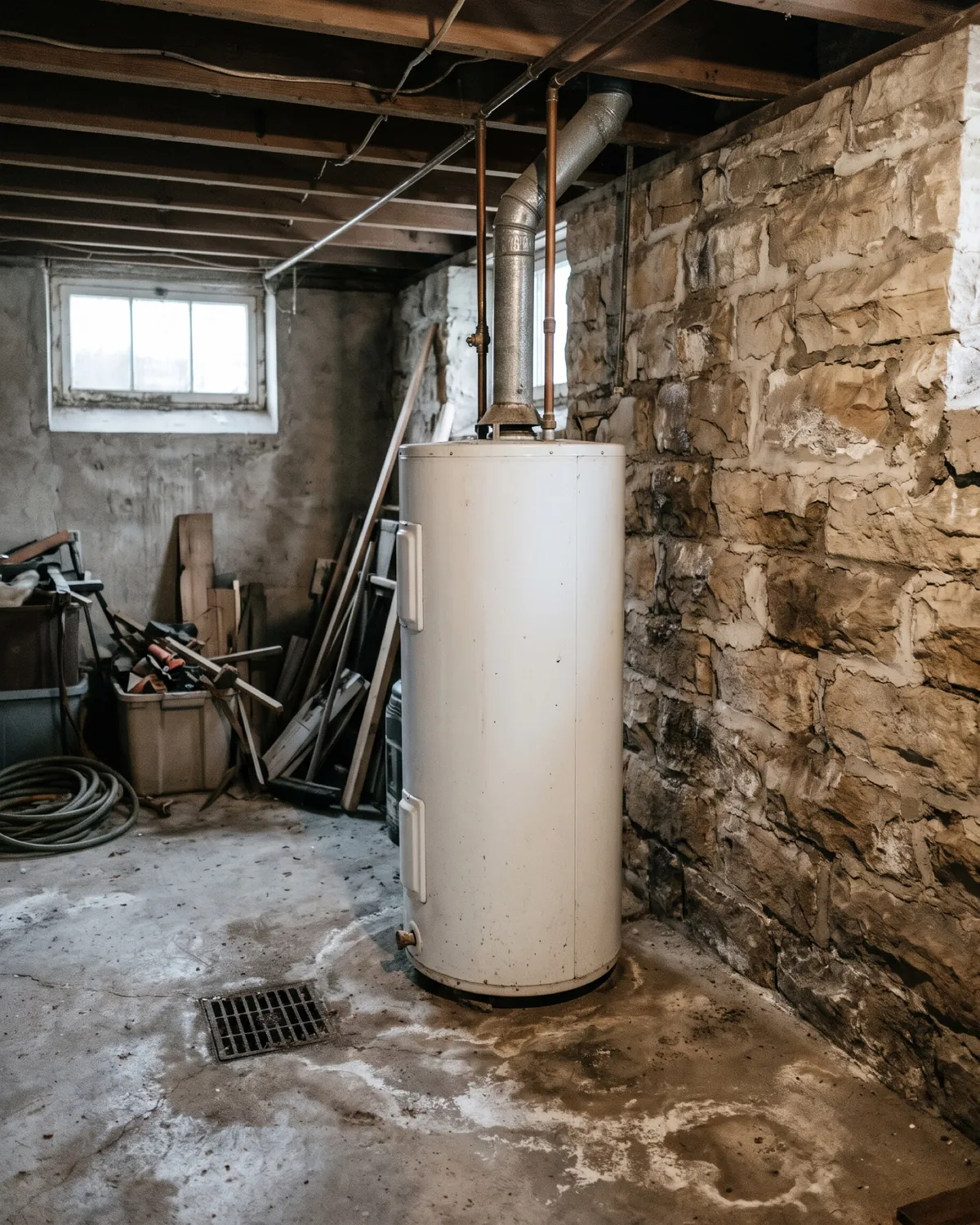
Water on the floor can come from the relief valve's pipe, a fitting on top, or the tank itself. A wet tank bottom with dry pipes above usually means the tank has failed.
How it works
What's inside a tank heater
Repair or replace
What usually decides it
Often a repair
- A thermocouple or flame sensor that lets the pilot go out
- A burned-out element or thermostat on an electric heater
- A relief valve that drips after a pressure spike
- A leaking fitting or drain valve, with a dry tank
- Rumbling from sediment, if flushing still clears it
Usually a replacement
- Water seeping from the tank body or the bottom seam
- Rusty hot water while the cold runs clear
- A heater whose age on the label puts it near the end of its design life
- Repeated repairs on the same unit
- A household that has outgrown the tank's size
Tank or tankless
Changing type is a bigger job than swapping a tank
A new tank of the same fuel and size in the same spot reuses the gas line, the vent and the water connections. That keeps the job short.
A tankless heater needs more. Gas models usually need a larger gas supply and their own vent through the wall, and the unit hangs on the wall instead of standing on the floor. Electric tankless units draw far more current than a tank and may need a new circuit or panel work by an electrician.
Ask the company to look at your gas meter, piping and venting before you settle on tankless. Hard water also matters: Newark softens its city water at the treatment plant, but a private well may not be softened, and scale builds up quickly inside a tankless heat exchanger.
Permits
Ask about the permit before the old heater comes out
- Plumbing permits in Licking County, Newark included, come from the Licking County Health Department.
- The county's plumbing rule exempts only a fixture swapped for a similar one in the same place. Ask whether your job counts.
- A move to tankless, a new location, or new gas or vent piping is the kind of change to ask about.
- Ask who pulls the permit and books the inspection. It should be the company, in its own name.
On the day
What a replacement disturbs
Water
The cold supply to the heater is shut off and the old tank drained, so hot water is off for the visit.
Gas
On a gas model the gas valve to the heater is closed while it's swapped and relit.
Space
The installer needs a clear path from the door to the heater and room to work around it.
The old tank
Ask whether haul-away is part of the price or extra.
Questions
Water heater questions from Newark homes
Why does my hot water run out faster than it used to?
Sediment takes up room in the bottom of a tank and insulates the water from the burner. On electric heaters, a failed lower element does the same thing. Both are worth a look before replacing the heater.
Is a dripping relief valve dangerous?
The valve is doing its job if it opens because pressure or temperature is too high. Don't cap or plug the discharge pipe. Ask the plumber to check the temperature setting and whether the house needs an expansion tank.
Can I keep using a heater that leaks from the tank?
Not for long. A tank leak only gets worse, and the water ends up on the floor. Shut off the cold supply and the gas or power until it's replaced.
Do I need to be home for the replacement?
Yes, or someone who can let the installer in, show where the main shut-off is, and check the hot water before they leave.
Hot water gone, or a tank that's leaking?
Have the label on the heater handy (fuel, size and age) when you call. It helps the plumbing company bring the right parts.
Phone a Licking County plumber
For a house or apartment in Newark, Heath, Granville or nearby with a leak, a clog, no hot water or a sewer problem.
Call (740) 555-0131Calls may be recorded. See how the referral is paid for and what happens to your details.